How to Choose the Best Solar Powered Garden Lights?
Choosing the right Solar Powered Garden Lights is not simply a matter of selecting the brightest design. A light that looks impressive online may produce weak illumination beside a shaded path. Good choices begin with the garden’s real conditions, including sunlight, weather, soil, and nighttime use. A south-facing panel may charge well, while a panel beneath dense branches may struggle. Small details matter.
Solar-energy researcher Richard Perez has described sunlight as “the most abundant energy resource on Earth.” That idea is encouraging, but garden lighting still depends on practical limits. Battery capacity, panel efficiency, lumen output, and winter daylight all affect performance. A light rated for eight hours may shine for less time after several cloudy days. It happens.
This guide explains how to compare Solar Powered Garden Lights with greater confidence. It considers pathway safety, decorative brightness, battery chemistry, charging time, waterproof protection, and installation height. It also examines whether a light creates useful illumination or only a pleasant glow. Look closely at the panel size, not just the lamp shape. Check the IP rating before placing fixtures near sprinklers or exposed flowerbeds. Warm white light can make stone paths feel welcoming, while cooler light may reveal edges more clearly.
There is no perfect model for every garden. Some buyers may overestimate brightness, while others may ignore replacement batteries. A thoughtful choice balances appearance, durability, charging conditions, and maintenance. The best fixture is usually the one that performs reliably in your garden, not the one with the longest advertisement.
Understanding Solar-Powered Garden Light Types and Features
How to Choose the Best Solar Powered Garden Lights?
Understanding Solar-Powered Garden Light Types and Features
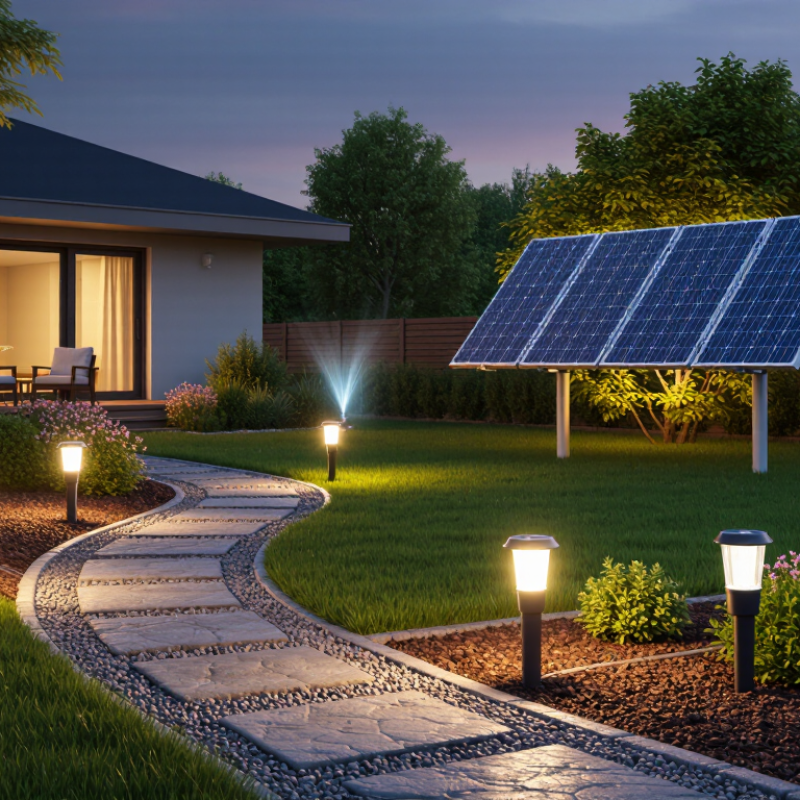
Solar garden lights serve different purposes, so the right type depends on your outdoor space. Path lights spread gentle light along walkways and steps. Spotlights highlight trees, statues, or textured walls. String lights create a softer atmosphere around patios and balconies. Wall lights can improve visibility near doors, while motion-sensor models respond when someone approaches.
Check the light’s lumen output, not just its appearance in product photos. Lower lumens suit decorative lighting, while entrances need stronger illumination. Warm white light usually feels comfortable in gardens. Cool white light may reveal details more clearly. I also examine the solar panel angle, battery capacity, and stated runtime. A small panel may struggle during cloudy weather. That matters.
Weather resistance is another practical feature. Look for clear water-resistance information, such as an IP rating, and choose durable housings for exposed areas. Replaceable batteries can extend the product’s useful life. Install panels where leaves, fences, or branches will not block sunlight. In my experience, even good lights perform poorly under dense shade. Some advertised runtimes also seem optimistic, especially during winter. Testing one or two units before lighting the entire garden can prevent an expensive mistake.
Assessing Garden Layout, Lighting Needs, and Sunlight Availability
Choosing the best solar powered garden lights begins with studying your garden layout. Mark pathways, steps, seating areas, flower beds, and dark corners. Each space needs a different lighting purpose. Path lights should create a clear walking route without producing glare. Accent lights can highlight a tree, stone border, or pond edge. Measure the distances between lights before buying. Crowded fixtures often look untidy and waste available energy.
Sunlight availability matters as much as brightness. Place panels where they receive several hours of unobstructed daylight. Overhanging branches, fences, and tall plants can reduce charging performance. Watch the garden at different times, not only during a sunny afternoon. Seasonal shadows may change everything. I once underestimated a nearby tree and noticed weaker lighting after summer growth. It was a useful reminder that gardens keep changing.
Tips: Choose adjustable panels for partly shaded areas. Clean dust and fallen leaves from panels regularly. Select warm light for seating zones and clearer light for paths. Check the expected operating time after a full charge. A lower brightness setting may last longer overnight. Avoid placing lights where rainwater collects. Test one fixture for several nights before installing many. Some plans still need revision. That is normal.
How to Choose the Best Solar Powered Garden Lights? - Assessing Garden Layout, Lighting Needs, and Sunlight Availability
| Garden Area or Feature | Primary Lighting Goal | Recommended Light Type | Typical Brightness | Suggested Spacing | Recommended Sunlight | Practical Selection Notes |
|---|---|---|---|---|---|---|
| Front Walkway | Improve visibility and guide visitors | Solar path lights with downward-facing optics | 10–30 lumens per light | 1.5–3 m apart, alternating sides | At least 4–6 hours of direct sunlight | Choose warm white light around 2700–3000 K to reduce glare and create a welcoming appearance. |
| Steps and Changes in Level | Highlight hazards and stair edges | Low-glare step lights or compact wall lights | 15–40 lumens per light | One light per step or every 1–2 steps | Preferably 5–6 hours of direct sunlight | Use shielded designs that illuminate the tread without shining directly into the eyes. |
| Patio or Seating Area | Provide comfortable ambient lighting | Solar string lights, lanterns, or table lights | 20–50 lumens per lantern | 1–2 m between string-light bulbs | Around 4–6 hours of direct sunlight | Select replaceable-battery models when possible, especially in areas with seasonal shade. |
| Driveway or Parking Edge | Define boundaries and improve orientation | Solar bollards or robust marker lights | 30–80 lumens per light | 3–5 m apart along the edge | At least 5 hours of direct sunlight | Look for sturdy housings, ground anchors, and an outdoor rating of at least IP44; IP65 is better for exposed locations. |
| Flower Beds and Borders | Add decorative accents and define planting areas | Small stake lights or decorative globe lights | 5–20 lumens per light | 0.8–1.5 m apart | 3–5 hours of direct sunlight | Use smaller fixtures so the plants remain the visual focus; warm white is generally less harsh. |
| Trees, Shrubs, and Garden Features | Create focal points and add depth | Solar spotlights with adjustable heads | 50–150 lumens per spotlight | One fixture per feature; place 0.5–2 m away | Preferably 6 or more hours of direct sunlight | Choose separate-panel models if the fixture must be installed in shade while the panel can face the sun. |
| Security-Sensitive Entry | Detect movement and provide short-term bright light | Solar motion-sensor floodlight | 300–800 lumens | Install above the entry and aim away from eye level | At least 5–6 hours of direct sunlight | Prioritize adjustable sensitivity, detection range, weather resistance, and a short timed activation mode. |
| Shaded or North-Facing Area | Provide dependable illumination despite limited charging | Solar light with a remote panel or low-light charging capability | 10–50 lumens, depending on the task | Use fewer fixtures and avoid unnecessary overlap | Any available direct sunlight; more is better | Expect shorter runtime during cloudy periods; consider a larger panel, higher-capacity battery, or supplemental low-voltage lighting. |
Comparing Brightness, Battery Capacity, and Energy Efficiency
Choosing the best solar powered garden lights starts with brightness, not appearance. Lumens show the visible light output, but placement changes how bright a lamp feels. A path light producing 20 to 50 lumens may guide footsteps gently. A security area usually needs much more light. I once placed low-lumen lights beside dark steps, and the result was attractive but not safe enough.
Battery capacity matters during cloudy weather. Check the battery rating in milliamp-hours, or mAh, and consider its voltage. A larger capacity can support longer nighttime operation, but it may also require more sunlight to recharge fully. For a small decorative light, a modest battery can be practical. In shaded gardens, choose a model with a larger battery and position its panel away from trees. More capacity is not always better.
Energy efficiency connects the panel, battery, and light source. Efficient LEDs provide useful brightness while consuming less stored energy. Look for a solar panel that matches the battery and expected daylight hours. A light that shines intensely for one hour may be less useful than one offering steady illumination for six hours. Weather also matters. Dust, winter angles, and repeated cloudy days reduce charging performance. My own early choices focused too heavily on brightness. I now compare nighttime runtime under realistic conditions, although even that test cannot perfectly predict every season.
Checking Weather Resistance, Materials, Installation, and Maintenance
Choosing solar garden lights starts with weather resistance, not brightness. Look for a clearly stated IP rating, tested under IEC 60529 conditions. IP65 protects against dust and water jets, while IP44 offers weaker splash protection. Heavy rain is manageable. Standing water is not.
Material choices affect service life. Powder-coated aluminum resists corrosion and stays cooler than dark plastic in direct sun. Stainless steel performs well near coastal air, but cheaper grades may still rust. UV-stabilized ABS or polycarbonate can work, although brittle plastic often reveals its limits after several summers.
The U.S. Department of Energy reports that LED lighting uses at least 75% less energy than incandescent lighting and lasts up to 25 times longer. That efficiency matters when a small panel charges a battery daily.
Installation should face the panel toward unobstructed sunlight, usually south in the northern hemisphere. Avoid placing it beneath dense branches or beside bright security lamps. NREL’s review of over 2,000 photovoltaic degradation measurements found a median decline near 0.5% annually, but garden panels face dirt, shade, and heat.
Clean the panel monthly with a soft damp cloth. Replace rechargeable batteries when nighttime brightness drops sharply. I have learned that “maintenance-free” is optimistic. Check seals, loosened stakes, and cloudy covers after storms.
A perfect specification cannot rescue poor placement.
Choosing the Best Solar Garden Lights for Your Budget and Style
Choosing the best solar garden lights starts with your budget, but style should guide every practical decision. Set aside more money for lights with stronger panels, replaceable batteries, and weather-resistant housings. These features usually improve reliability over several seasons. In my own garden, inexpensive lights looked attractive at first, but their dim glow disappeared after cloudy days. Warm light suits wooden paths and flower beds. Cool light creates a sharper, more modern appearance. Small mistake.
Tips: Measure the area before buying. A narrow path may need several low-lumen lights, while a patio needs brighter illumination. Check the battery capacity, charging time, and weather-resistance rating. Place the panel where it receives direct sunlight for most of the day. Shade from fences can reduce evening performance noticeably.
Your style also affects spacing and shape. Stake lights create clear borders, while lantern-style fixtures add a softer, decorative feeling. Choose finishes that match nearby materials, such as dark metal beside stone or neutral walls. Avoid mixing too many colors or designs; the garden can quickly look untidy. I once placed lights too close together, expecting stronger brightness, but the result felt crowded. Testing two or three positions first is wiser. Remember that winter sunlight may be weaker, so performance can change with the season.
Related Posts
-
10 Tips for Buying Solar Lights For Garden
-
Exploring Growth Trends for Low Voltage Garden Lights at the 138th Canton Fair 2025 in China
-
Overcoming Common Issues with Outdoor LED Lights: A Comprehensive Guide
-
Illuminate Your Outdoor Spaces: The Ultimate Guide to Solar Lamps for Global Buyers
-
Innovative Solar Landscape Lighting Trends Shaping the Future of Outdoor Illumination
-
10 Best Smart Garden Lights for Outdoor Use?