China Top Outdoor LED Light Manufacturers for Global Buyers
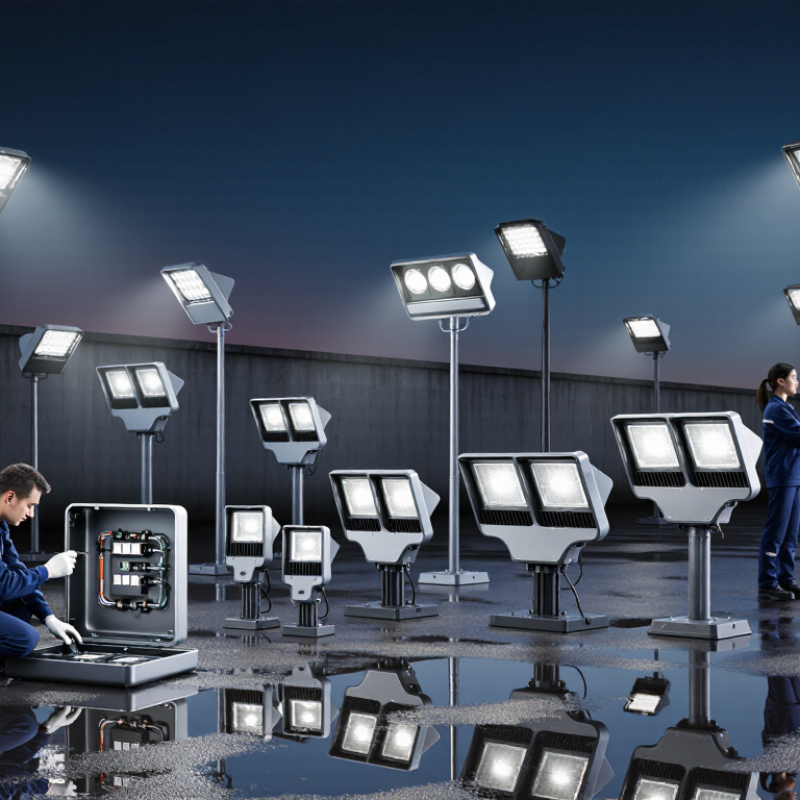
Choosing the right China Top Outdoor LED Light Manufacturers for Global Buyers requires more than comparing prices. Outdoor Led Light products must survive rain, dust, heat, cold, and repeated installation. A reliable supplier should explain lumen output, beam angle, color temperature, IP rating, surge protection, and expected service life. Product photos are useful, but test reports and sample inspections provide stronger evidence. Real performance matters.
Experienced manufacturers usually offer clear technical drawings, stable component sourcing, and practical customization support. Ask about LED brands, driver models, housing materials, wiring standards, and production lead times. A factory that welcomes third-party inspection often shows greater confidence. Request a sample before placing a large order. Check its brightness at night, cable sealing, connector quality, and heat dissipation after several hours.
Details reveal professionalism.
Global buyers should also review certifications required in their target markets. These may include safety, electromagnetic compatibility, and energy-efficiency documentation. Requirements differ by country, so independent verification remains important. Some suppliers present impressive catalogs but provide limited after-sales support. That weakness can become expensive after installation. Warranty terms, spare parts, replacement procedures, and communication speed deserve equal attention. No supplier is perfect, and even a strong factory may have inconsistent batches or delayed responses during peak seasons. Careful buyers should record these risks instead of ignoring them. This guide compares manufacturing experience, product quality, engineering capability, export reliability, and service transparency. Its goal is practical decision-making, not exaggerated promotion. A trustworthy Outdoor Led Light partner should deliver measurable performance, honest communication, and dependable support from sample approval to long-term operation.
China’s Outdoor LED Lighting Manufacturing Landscape
China Top Outdoor LED Light Manufacturers for Global Buyers
China’s Outdoor LED Lighting Manufacturing Landscape
China remains a major production base for outdoor LED lighting. UN Comtrade records place China among the largest exporters of lighting products under HS 9405. Its manufacturing network covers LED packages, drivers, aluminum housings, lenses, and thermal components. This vertical supply chain can shorten development cycles. It can also create inconsistent quality between factories.
The market is driven by energy performance. The International Energy Agency reports that lighting uses about 15% of global electricity. The U.S. Department of Energy notes that LED products can use at least 75% less energy and last up to 25 times longer than incandescent lighting. These figures are useful benchmarks, not universal guarantees. Streetlights still need careful testing under heat, rain, dust, and voltage variation.
Look beyond brightness claims. Ask for LM-79 photometric reports, LM-80 lumen-maintenance data, and testing under IEC 60598 requirements. Check IP and IK ratings on complete fixtures, not only components. A well-sealed housing should protect connectors and drivers from moisture. Poor thermal design remains a common weakness. It may cause early lumen loss, especially in hot industrial zones. Buyers should also inspect sample wiring, surge protection, coating thickness, and spare-part availability. Factory audits help, but they are not perfect. Independent verification is still necessary.
Key Product Categories for Global Outdoor Lighting Projects
Outdoor lighting projects need more than bright fixtures. They require the right product category for each space, climate, and maintenance plan. Start with the site. Roadway LED lights should provide uniform illumination, controlled glare, and stable performance during long operating hours. Parking area fixtures need wide coverage and strong mounting structures. Details matter.
Architectural LED floodlights help highlight building façades, bridges, signs, and landscape features. Adjustable beams are valuable when designers need precise shadows or color effects. In-ground lights suit walkways and plazas, but drainage and impact resistance deserve careful review. Bollard lights support pedestrian safety around parks, campuses, and residential developments. Their height, spacing, and optical distribution can change the visual experience significantly.
High-mast systems serve ports, sports grounds, logistics yards, and large public areas. Tunnel lights need fast response, reliable thermal control, and careful brightness adjustment between day and night. Underwater fixtures demand suitable sealing and corrosion resistance. Solar LED street lights can reduce wiring work, yet battery performance may decline in cold or shaded locations. It is not a perfect solution.
Experienced buyers should compare photometric files, ingress protection, surge protection, heat management, and replacement access. A low unit price can hide higher installation costs. I have seen projects over-specify brightness while overlooking glare and neighborhood comfort. Lighting calculations should be checked against real mounting heights and surface conditions, not only catalog data.
China Top Outdoor LED Light Manufacturers for Global Buyers
Key Product Categories for Global Outdoor Lighting Projects
The chart compares representative rated-power levels commonly specified for major outdoor LED lighting categories. Actual wattage depends on road class, mounting height, optical distribution, target illuminance, and local lighting standards.
How to Evaluate Chinese Outdoor LED Light Manufacturers
When evaluating Chinese outdoor LED light manufacturers, inspect evidence, not polished promises. Ask for factory photos, production capacity, and recent project references. A serious supplier should explain LED chips, drivers, thermal design, and waterproof construction clearly. Vague answers deserve caution.
Request a sample before placing a large order. Check brightness, color consistency, cable sealing, and housing strength under practical conditions. Look for test reports covering ingress protection, electrical safety, and thermal performance. Verify whether an independent laboratory issued them. Also review quality controls for incoming components, assembly, aging tests, and final inspection. Small details matter.
Ask how the manufacturer handles outdoor failures. Can they trace a batch by serial number? Is the warranty written in clear language? Who pays for replacement shipping? A reliable team provides drawings, installation guidance, spare-part plans, and responsive technical support. Their export experience should include packaging suited to long-distance transport.
Do not trust every certificate immediately. Confirm its scope and validity. An impressive sample may hide inconsistent mass production. That risk is easy to underestimate. Compare several suppliers using the same checklist, specifications, and testing conditions. My own evaluation would include a pilot order, because real performance often reveals weaknesses that documents cannot. A manufacturer willing to discuss limitations may be more dependable than one promising perfection.
China Top Outdoor LED Light Manufacturers for Global Buyers - How to Evaluate Chinese Outdoor LED Light Manufacturers
A practical comparison framework for evaluating outdoor LED lighting manufacturers without relying solely on company size, advertising claims, or product price.
| Evaluation Dimension | What to Check | Recommended Benchmark | Acceptable Evidence from the Manufacturer | Buyer Risk | Priority |
|---|---|---|---|---|---|
| Product Application | Whether the manufacturer has experience with street lighting, floodlighting, high-bay lighting, landscape lighting, or area lighting. | Products should be matched to the intended mounting height, beam angle, operating hours, weather conditions, and lighting standard. | Application drawings, photometric files, installation references without undisclosed customer data, and sample project calculations. | Incorrect light distribution can create dark spots, glare, or excessive energy use. | High |
| LED Performance | LED efficacy, color temperature, color rendering, lumen maintenance, and consistency between production batches. | Require current test data for the exact LED configuration. Efficacy should be assessed at system level, not only at LED-chip level. | LM-80 data for LED packages, TM-21 projection where applicable, integrating-sphere reports, and complete product test conditions. | Marketing figures may represent laboratory conditions rather than finished-product performance. | High |
| Photometric Quality | Beam angle, glare control, uniformity, optical efficiency, and compatibility with local road or site requirements. | Photometric files should be available in recognized formats such as IES or LDT and should correspond to the supplied product configuration. | IES/LDT files, test reports from an accredited laboratory, glare-control details, and lighting simulation results. | Unverified photometric files may produce inaccurate project calculations. | High |
| Ingress Protection | Resistance to dust and water at the housing, optical compartment, driver compartment, cable glands, and connectors. | Outdoor luminaires commonly require IP65 or higher; demanding locations may require higher protection according to the installation environment. | IP test report for the complete luminaire, not only for an individual component, plus sealing and drainage design information. | Water ingress can cause corrosion, driver failure, insulation damage, and premature LED degradation. | High |
| Impact Resistance | Mechanical durability of the housing, lens, cover, and mounting components. | Select the impact rating according to the installation risk. IK08 or IK09 may be suitable for many outdoor applications, while exposed public areas may require higher protection. | IEC 62262 or equivalent impact-resistance test documentation for the finished luminaire. | Weak covers or housings may be damaged during transport, installation, vandalism, or severe weather. | Medium |
| Thermal Management | Heat-sink design, thermal interface materials, airflow, junction-temperature control, and driver operating temperature. | The manufacturer should provide operating temperature limits and explain how thermal performance was validated under continuous operation. | Thermal simulation, temperature-rise testing, thermal photographs, and a clearly stated ambient-temperature range. | Poor heat dissipation accelerates lumen depreciation and shortens driver and capacitor life. | High |
| Surge Protection | Protection against transient voltage caused by lightning, utility switching, and unstable power networks. | Specify the surge-protection level in the quotation and verify whether protection is internal, replaceable, or externally installed. | Surge test reports, wiring diagrams, protective-device specifications, and replacement instructions. | Insufficient surge protection is a common cause of outdoor lighting failure. | High |
| Driver Reliability | Driver brand-independent specifications, efficiency, power factor, total harmonic distortion, dimming compatibility, and replaceability. | The driver should be correctly sized for the LED load and rated for the required ambient temperature and input-voltage range. | Driver datasheet, safety and EMC reports, power-quality data, wiring diagram, and spare-part availability statement. | Driver failure can disable the entire luminaire even when the LED module remains functional. | High |
| Electrical Compliance | Electrical safety, electromagnetic compatibility, photobiological safety, and country-specific requirements. | The product should be tested against the standards required in the destination market rather than relying only on general factory declarations. | Valid third-party test reports, declarations of conformity, technical construction files, and component certificates where relevant. | Non-compliant products may be rejected by customs, inspectors, utilities, or project consultants. | High |
| Material and Finish | Housing material, corrosion resistance, coating process, stainless-steel grade, lens material, and fastener quality. | The finish should be selected for the actual climate, including coastal salt exposure, humidity, industrial pollution, or freezing conditions. | Material declarations, coating-process description, salt-spray test results where applicable, and corrosion-protection details. | Corrosion can affect structural integrity, heat dissipation, sealing, and appearance. | Medium |
| Quality Control System | Incoming inspection, production controls, aging tests, final inspection, traceability, and nonconformance handling. | A documented quality system should control both components and finished luminaires, with records linked to production batches. | Quality certificates, inspection plans, sample inspection records, aging-test procedures, and factory-audit access. | Inconsistent process control can result in batch-to-batch variation. | High |
| Customization Capability | Optical options, mounting adapters, dimming interfaces, cable length, color temperature, housing color, and labeling. | Custom changes should be documented through approved drawings and confirmed by a sample before mass production. | Engineering drawings, change-control records, prototype samples, and a written list of included and excluded modifications. | Uncontrolled customization may cause compatibility, approval, or maintenance problems. | Medium |
| Sample Validation | Whether the production sample accurately represents the final mass-production configuration. | Test samples should include the final LED, driver, optics, housing, firmware, cable, and mounting accessories. | Signed sample-approval document, sample photographs, serial numbers, test results, and retained reference samples. | A sample using different components may not predict mass-production performance. | High |
| Warranty Terms | Warranty period, covered failures, exclusions, replacement process, labor responsibility, and claim documentation. | The warranty should clearly define operating conditions, installation requirements, response time, and replacement or credit procedures. | Signed warranty document, failure-analysis procedure, spare-parts policy, and service contact information. | A long headline warranty has limited value if exclusions and claim procedures are unclear. | High |
| Spare Parts and Maintenance | Availability of drivers, surge protectors, lenses, gaskets, connectors, brackets, and replacement modules. | Critical replacement parts should remain available for the planned maintenance period, especially for infrastructure projects. | Parts list, replacement instructions, compatibility matrix, stock policy, and expected discontinuation notice period. | Unavailable parts can force premature replacement of otherwise serviceable luminaires. | Medium |
| Production Capacity | Monthly output, assembly lines, testing capacity, component supply, and ability to meet the required delivery schedule. | Capacity claims should be checked against the required quantity, peak-season schedule, quality controls, and confirmed component availability. | Production plan, capacity statement, lead-time schedule, factory-audit findings, and purchase-order progress reports. | Overstated capacity may cause shipment delays or rushed quality inspections. | Medium |
| Packaging and Logistics | Protection against impact, moisture, vibration, stacking pressure, and incorrect installation during international transport. | Packaging should be designed for the transportation mode and should protect lenses, brackets, connectors, and finished surfaces. | Packaging drawings, drop-test records, carton markings, pallet plans, and loading photographs. | Transport damage can create hidden defects that appear only after installation. | Medium |
| Total Cost of Ownership | Purchase price, energy consumption, installation cost, maintenance, replacement parts, warranty exposure, and expected service life. | Compare delivered system cost and operating cost over the project life instead of comparing unit price alone. | Energy calculations, maintenance assumptions, replacement-cost estimates, warranty terms, and lifecycle-cost model. | The lowest initial price may result in higher energy, maintenance, or replacement costs. | High |
Quality Standards, Certifications, and Export Compliance
When global buyers compare China’s outdoor LED light manufacturers, compliance should guide the shortlist. Quality begins with design controls, not attractive product photos. Ask for test reports covering IEC 60598 safety requirements, EMC performance, and environmental protection. For outdoor fixtures, verify ingress ratings such as IP65 or IP66 against the tested model. Check the label, driver, housing, cable gland, and mounting hardware. Small mismatches can create costly delays.
Certifications must match the destination market and product configuration. CE documentation may support European sales, while UKCA, CB, or other national requirements may apply elsewhere. RoHS evidence should identify restricted-substance controls and supplier declarations. Request the certificate number, laboratory name, issue date, and model range. A genuine report should be traceable. Do not accept a generic PDF without verification. This is where many buyers become too trusting.
Export readiness includes accurate HS classification, commercial invoices, packing lists, and origin information. The carton should show model details, electrical ratings, quantity, and handling marks. Before shipment, compare the production sample with approved drawings and photometric files. Confirm voltage, frequency, color temperature, lumen output, and control protocol. In practical sourcing, this final check often reveals silent substitutions. A certificate proves a test occurred, not that every shipment remains identical. That distinction deserves careful review.
Sourcing, Customization, Pricing, and International Shipping
China Top Outdoor LED Light Manufacturers for Global Buyers
Sourcing outdoor LED lights requires more than comparing catalog prices. Experienced buyers should check housing materials, LED efficiency, waterproof ratings, and thermal management. Ask for test reports, installation photos, and sample units before placing a large order. A reliable manufacturer should explain light distribution, color temperature, lifespan, and maintenance needs clearly. I have found that factory communication often reveals more than polished product pages.
Customization may include wattage, beam angle, mounting brackets, cable length, and packaging. Share drawings, site dimensions, and climate conditions early. Pricing depends on components, order quantity, testing, packaging, and payment terms. A low quote may look attractive, but it can hide weaker drivers or thinner aluminum. Request a detailed quotation with every cost listed. My own mistake was comparing prices before confirming the same specifications.
Tips: Start with samples. Confirm production tolerances. Keep approved samples for reference. Ask who handles export documents and shipping coordination. For international delivery, confirm Incoterms, carton dimensions, gross weight, and the destination port or warehouse. Sea freight usually suits larger orders, while air shipping supports urgent replacements. Delays still happen. Build buffer time into project schedules. Reliable cooperation grows through records, inspections, and honest revisions, not promises alone.
Related Posts
-
The Ultimate Showdown of the Best Outdoor Led Light Options for Every Need
-
10 Best Garden Spot Lights for Global Buyers
-
Navigating Global Standards: A Comprehensive Guide to Import Certifications for Solar Lights Outdoor
-
Top 10 Solar Lights for Sustainable Outdoor Living?
-
Ultimate Checklist for Choosing the Best Garden Spot Lights for Your Outdoor Oasis
-
The Ultimate Guide to Choosing the Best Solar Lamps for Your Outdoor Space